I is for ILS ✈️ Finally Master Precision Landings | MSFS 2024
Master the ILS in Microsoft Flight Simulator 2024—from decoding localizer beams to performing a full A320 V2 Autoland. In this MSFS 2024 tutorial, we reveal the secrets of precision landings using Jeppesen and LIDO charts like a pro.
Stop crashing in bad weather! Today we unlock the SECRETS of the ILS (Instrument Landing System). We’re going from "flying the needle" by hand to letting the A320 V2 land itself in total fog using CAT III Autoland logic.
In this guide, we decode the radio beams, master complex charts, and show you the "Donkey Logic" every pro pilot uses to stay on the path. Understanding the relationship between the Localizer (LOC) and Glide Slope (G/S) is the difference between a smooth touchdown and a dangerous go-around.
We dive deep into Aviation Education, breaking down the Decision Height (DH), Runway Visual Range (RVR), and how to identify the Lightning Bolt intercept altitude on your briefing strip. Whether you’re navigating the busy airspace of Amsterdam Schiphol (EHAM) or Seattle-Tacoma (KSEA), these pro tips will ensure you hit the bullseye every single time.
🕒 Chapters
0:00 - I is for ILS: The Pilot’s Best Friend
0:15 - How the ILS Beam Works (90Hz vs 150Hz)
2:12 - CAT I, II, & III: When to use Autoland
3:35 - Jeppesen vs. LIDO: Which Chart is Better?
4:16 - Mastering the Jeppesen Briefing Strip
8:45 - Decoding LIDO Charts (The European Way)
11:32 - A320 V2 ILS Setup & CAT III Autoland
14:46 - Pro Trivia: The "Donkey Logic" Secret
🔗 Resources & links
If you like this video please consider to subscribe to my channel: https://bit.ly/34eNWDP
Tutorials playlist: https://bit.ly/3l6fRdL
✈️ About This Series
The MSFS Alphabet is designed to help you become a better virtual pilot, one letter at a time. From Ailerons to Zero-Fuel Weight, we cover the primary flight controls and technical terms you need to know.
#MSFS2020 #MSFS2024 #MicrosoftFlightSimulator #AviationEducation #FlightSim #PilotTraining #AviationBasics
Related Videos

🚀 Join the MSFS 2024 Technical Alpha! | How to Participate & What to Expect ✈️

Saab 340 Finally Explained! CTOT & Engine Guide (MSFS 2024)

New MSFS 2024 Marketplace & Stunning Brazil Update! + CAP-4 Paulistinha Sneak Peek! 🌴🚀
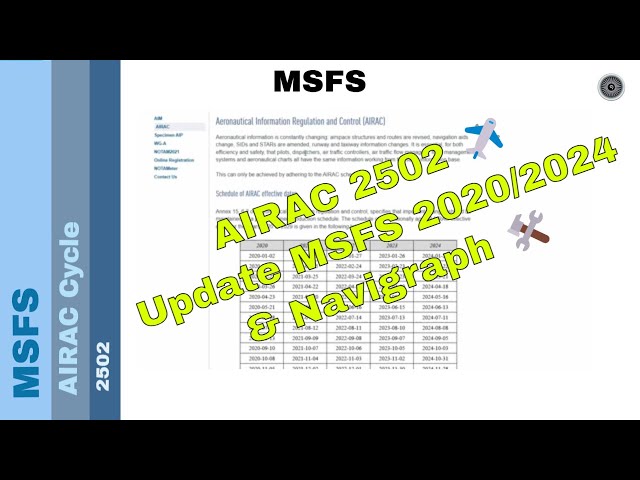
AIRAC Cycle 2502: Update MSFS 2020/2024 & Navigraph Tutorial ✈️

🔴 THE RANDOM FLIGHT CHALLENGE! ✈️ (Where are we going?)
